

Four Oxford social scientists awarded major European Research Council Advanced Grants
23 June 2026
Four academics from Oxford’s Social Sciences Division were awarded Advanced Grants from the European Research Council (ERC), each worth up to €2.5 million over a period of five years.
Professor Robert Klassen (Department of Education), Professor Barbara Petrongolo (Department of Economics), Professor Rick Schulting (School of Archaeology) and Professor Martin Weidner (Department of Economics)* have been named among the recipients of the awards across European institutions. The Social Sciences Division's Research, Impact and Engagement team supported two of them through their consultancy service.
The ERC Advanced Grants competition, part of the EU’s Horizon Europe programme, is one of the most prestigious and competitive funding schemes in the European Union. This year, fourteen University of Oxford academics were awarded ERC Advanced Grants, representing a diverse range of research fields.
Professor Robert Klassen, Department of Education
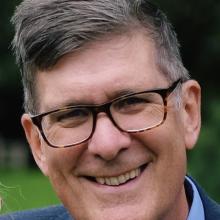
Teacher shortages are a global challenge, yet we know surprisingly little about how to attract talented young people into the profession. Professor Robert Klassen's project (his third funded by the ERC) will develop a new science of motivation-based teacher recruitment. TEACHFORCE combines motivation science, AI-driven digital technologies, and longitudinal studies to understand how and when young people make decisions about teaching as a career. The findings will help education systems address teacher shortages through more personalised and evidence-based recruitment strategies.
Professor Klassen said: "Receiving an ERC Advanced Grant is an honour and an exciting opportunity to pursue ambitious research on this global challenge. I am particularly grateful to my colleagues in Oxford’s Department of Education and the exceptional members of my research team whose ideas, energy and commitment have helped shape this programme of work."
Professor Barbara Petrongolo, Department of Economics
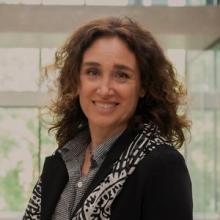
The GENTALENT project investigates how childbirth, workplace organisation and social norms shape the division of paid and unpaid work within families, and how these patterns affect careers, parental wellbeing and child development. By combining rich administrative and survey data with new approaches to understanding gender specialisation, the project will build a research platform to analyse the future of work and family.
Professor Petrongolo said: "I am truly honoured to receive an ERC Advanced Grant. This award provides a unique opportunity to pursue an ambitious research agenda on pressing challenges facing modern societies. I’m looking forward to starting new collaborations with my co-authors and form new research partnerships with postdocs and DPhil students."
Professor Rick Schulting, School of Archaeology
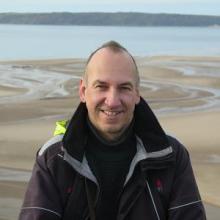
‘Stocking the Past’ combines existing and novel biomolecular approaches to identify the foods eaten by people in Neolithic and Bronze Age Britain and Ireland. In particular, it will help distinguish between the consumption of cereals and animal products such as meat and dairy, something that existing methods have struggled to achieve. In doing so, the project will shed light on a major debate about whether arable farming ‘collapsed’ a few centuries after its arrival around 4000 BC, resulting in a shift towards livestock-based economies. The approach will be more broadly applicable for studying past diets in many other regions and time periods.
Professor Schulting said: "The ERC award will allow us to pursue a challenging research problem with a level of focus and support that would otherwise be impossible to achieve. I am especially pleased to be able to support promising early career researchers through the project."
Professor Martin Weidner, Department of Economics*
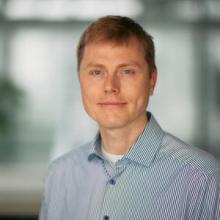
Professor Weidner’s HOTMAP project will develop new statistical methods to help economists draw more reliable conclusions from complex data, particularly to make economic estimates based on machine learning more robust and less vulnerable to bias. This could improve the way economists assess cause and effect, and support better analysis in areas including policy evaluation, studies using natural experiments and research that tracks changes over time.
Professor Weidner said: "I am delighted and honoured to receive this ERC Advanced Grant. It will allow me to work on an ambitious research agenda over five years, and to bring the wider econometrics community together through workshops and conferences as we develop methods that I hope will be genuinely useful to applied researchers across economics."
*Professor Weidner will be moving from Oxford to join the London School of Commerce (LSC) later this year.