

Hopping across disciplines to investigate rabbits and ecology in new BBC Ideas film
27 August 2026
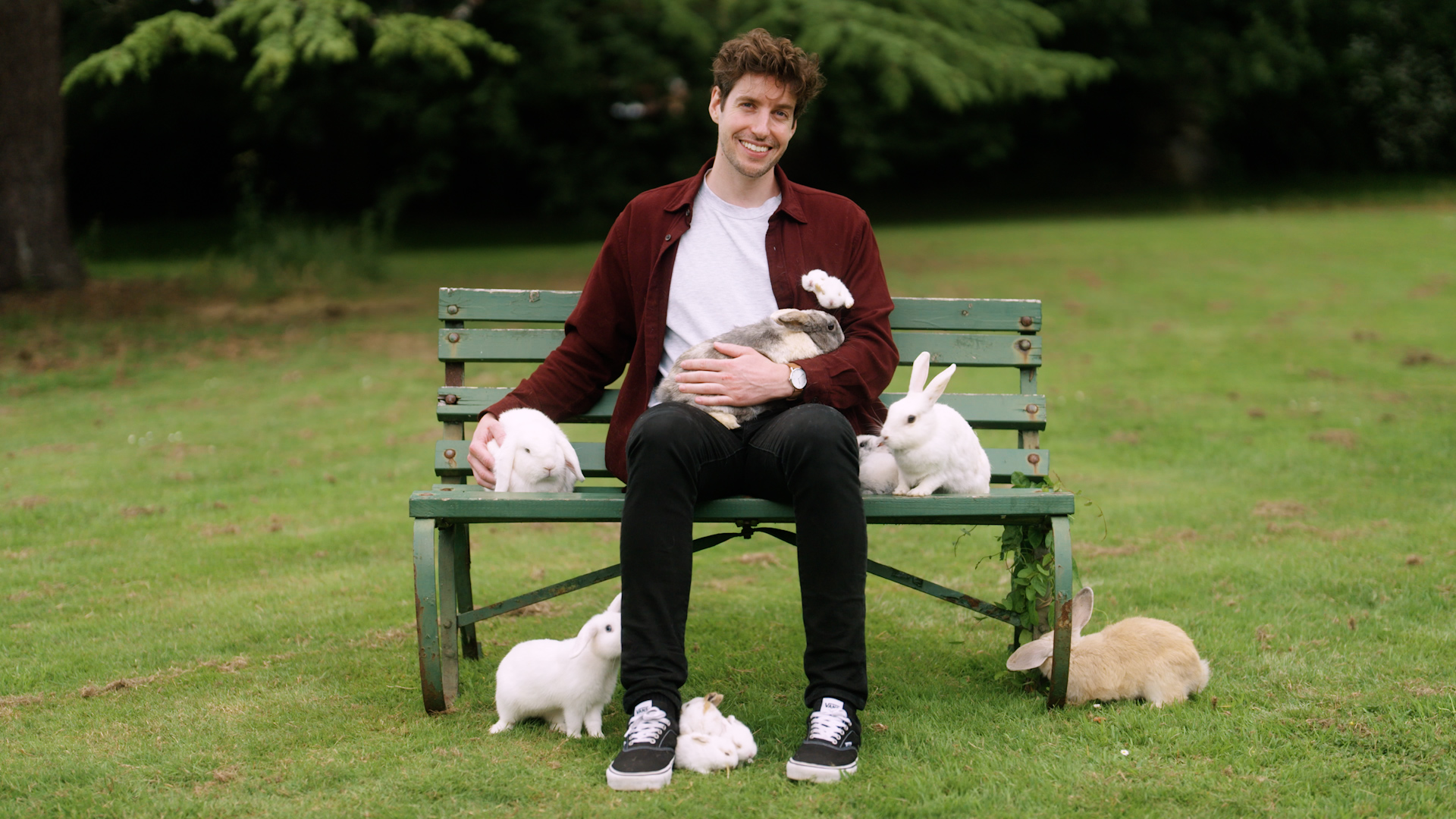
From Beatrix Potter’s Peter Rabbit, to the White Rabbit in Alice’s Adventures in Wonderland, rabbits are often the protagonists of childhood stories. But rabbits are not native to Britain: they originate from the Iberian Peninsula and were first brought here by the Romans and later reintroduced by the Normans. While they historically caused significant agricultural damage, they managed to become a very familiar presence in the British countryside.
But what happened when wild rabbits were introduced to Australia - a continent with very different ecosystem and landscape compared to their native range in Europe?
"The 24 rabbits that (nearly) destroyed a continent", a new film produced as part of the Social Sciences Division's ongoing partnership with BBC Ideas, recounts this unique story that blends history, archaeology and genetics to investigate the past.
The partnership, now releasing its third film series, is aimed at harnessing Oxford's academic research excellence. The five-minute films explore ideas that challenge and inform viewers, engaging new audiences with Social Sciences research in the process.
"The 24 rabbits that (nearly) destroyed a continent"
In just five minutes, Joel Alves (School of Archaeology) tells us the story of a small group of European wild rabbits which wreaked havoc in Australia, and how the attempts to manage their population had profound consequences not only on the continent, but also closer to home.
Joel Alves is a senior researcher at the School of Archaeology, University of Oxford, and at the Centre for Research in Biodiversity and Genetic Resources (CIBIO-BIOPOLIS) in Portugal.
An evolutionary biologist in an archaeology department, Joel connects the natural and social sciences by integrating ancient and modern DNA with archaeological and historical evidence to uncover stories that link the past to the present. His curiosity-driven research explores how people, animals and landscapes have influenced one another over time, and how these interactions have shaped the biodiversity we see in the world today.
The story that Joel narrates in the BBC Ideas film is based on two main research papers that Joel led on, originating from his PhD research at the University of Cambridge and at CIBIO-BIOPOLIS.
A single introduction of wild rabbits triggered the biological invasion of Australia
In this paper, Joel and his collaborators combine genetic evidence with historical records to trace the origin of Australia’s rabbit invasion to 24 rabbits from Somerset that were introduced by Thomas Austin in 1859.
Alves, Joel M., et al. "A single introduction of wild rabbits triggered the biological invasion of Australia." Proceedings of the National Academy of Sciences 119.35 (2022): e2122734119.
Parallel adaptation of rabbit populations to myxoma virus
This paper shows how Joel and his collaborators analysed historical DNA from museum specimens and compared it with DNA from modern rabbit populations to identify the genetic changes that enabled rabbits to develop resistance to myxomatosis, a devastating disease caused by the myxoma virus that was introduced as a form of biological control in Australia in 1950.
Alves, Joel M., et al. "Parallel adaptation of rabbit populations to myxoma virus." Science 363.6433 (2019): 1319-1326.
BBC Ideas produces a variety of thought-provoking short films and videos aimed at a general audience of under-35s that are designed to offer a fresh perspective across a broad range of topics and issues. The films we have produced in partnership can be watched on the BBC Ideas partnership page.